School custodial teams play a critical role in maintaining safe, healthy, and welcoming learning environments. Yet many districts struggle with school custodial training due to high turnover, inconsistent cleaning methods, and limited time for onboarding new employees.
Too often, new custodians are shown “how we do it here” by a coworker who appears experienced. While informal, on-the-job instruction may seem efficient, it frequently leads to shortcuts, confusion, and wide variations in performance. Without structured training, expectations differ from building to building, and even shift to shift.
For schools seeking long-term consistency and accountability, a formal school custodial training program is essential.
Why Informal Training Fails in School Environments
Many school districts rely on peer-to-peer instruction. While experienced staff bring valuable insight, informal training creates several problems:
- Inconsistent cleaning methods
- Improper chemical use
- Equipment misuse
- Lack of standardized expectations
- Difficulty holding staff accountable
Without documented procedures, custodians develop habits based on personal experience rather than industry standards. Over time, this results in uneven cleaning quality, increased safety risks, and higher operational costs.
Schools require structured, repeatable systems, not guesswork.
What an Effective School Custodial Training Program Should Include
A successful school custodial training program begins with clearly defined standards and documented procedures.
Every custodian should be trained in:
- Classroom cleaning procedures
- Restroom sanitation protocols
- Floor care techniques
- High-touch surface disinfection
- Chemical handling and dilution
- Equipment operation and maintenance
- Safety standards and PPE use
Training should explain not only how to perform tasks, but why specific procedures matter, particularly when it comes to disinfectant dwell times, cross-contamination prevention, and surface protection.
School Custodial Training Program Checklist
For schools building or evaluating their custodial training, the following framework provides a strong foundation:
- Written cleaning procedures and SOPs
- Structured onboarding process
- Chemical safety training
- Equipment operation certification
- Defined quality standards
- Periodic performance evaluations
- Refresher training sessions
When training is structured and documented, supervisors can coach more effectively and measure performance objectively.
The Role of Written Procedures and Manuals
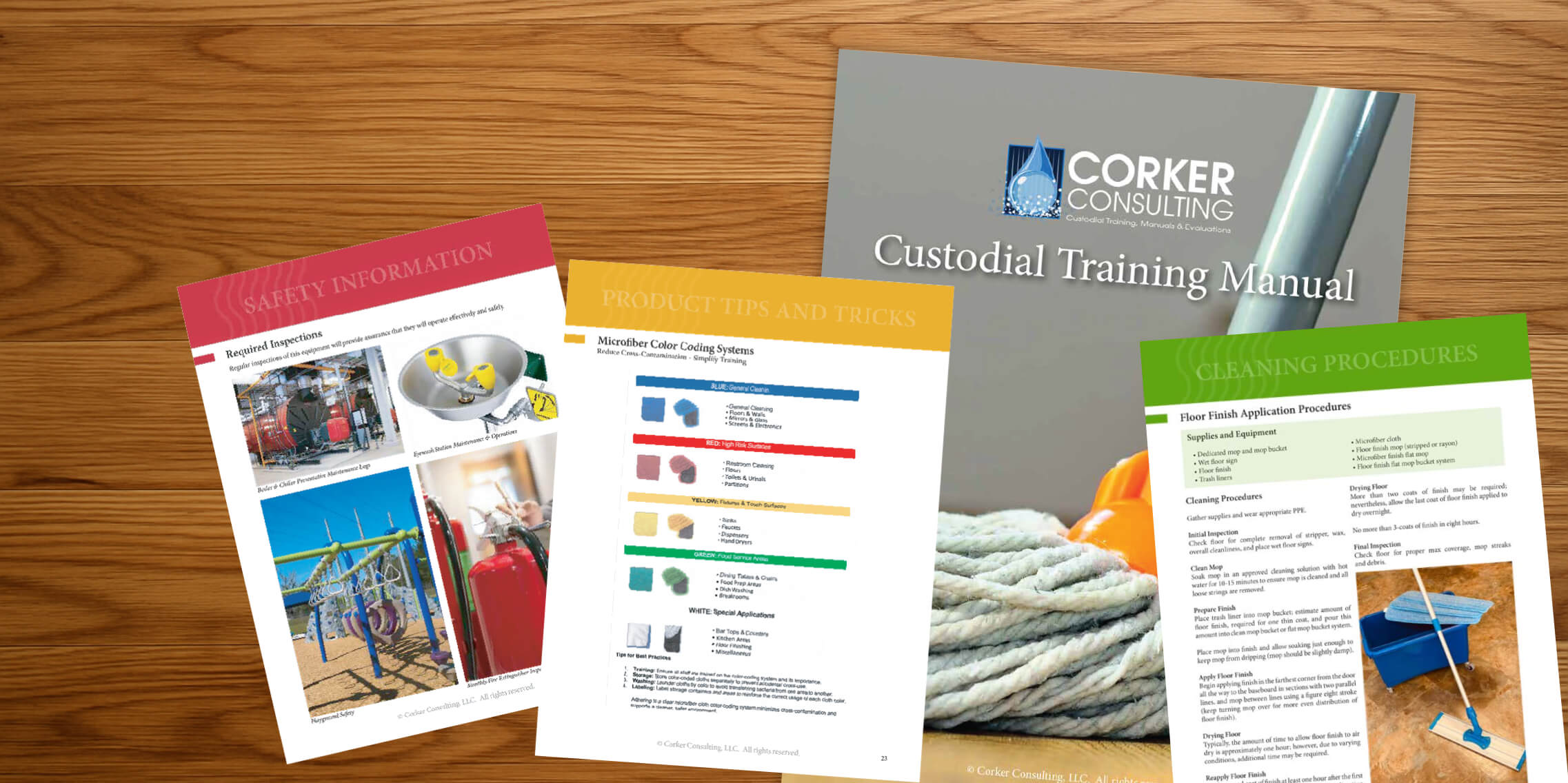
A comprehensive school custodial cleaning manual is the backbone of sustainable training.
Written procedures:
- Eliminate reliance on memory
- Standardize cleaning across buildings
- Support onboarding of new employees
- Reduce safety risks
- Strengthen accountability
When procedures are clearly documented, expectations remain consistent, regardless of staff turnover or leadership changes.
For Michigan school districts managing multiple buildings, standardized manuals are especially valuable for maintaining consistency across locations.
How Proper Training Improves Safety and Efficiency
Structured custodial training in schools delivers measurable benefits:
- Reduced injuries and chemical exposure risks
- Improved cleaning consistency
- Fewer complaints from staff and parents
- Increased employee confidence and morale
- Better alignment between staffing and workload
When custodians understand expectations and proper procedures, they work more efficiently and safely.
When to Seek Outside Training Support
Some districts attempt to build internal training programs but struggle with:
- Inconsistent standards across buildings
- High staff turnover
- Lack of documented procedures
- Limited time to develop materials
In these cases, external custodial training support can accelerate progress. Experienced consultants bring structured programs, proven documentation systems, and industry benchmarks that help districts move from informal habits to professional systems. There are a variety of options to facilitate this as well, including online custodial training specifically configured for remote learning and accessibility.
Connecting Training to Custodial Evaluations
Training is most effective when aligned with measurable standards.
Formal school custodial evaluations establish a baseline of performance, identify operational gaps, and guide targeted training initiatives. When districts align school custodial training with evaluation data, they can track improvements, justify budgeting decisions, and ensure continuous improvement over time.
Building Long-Term Operational Excellence
Investing in structured school custodial training is an investment in:
- Student health
- Staff safety
- Operational efficiency
- Facility longevity
Schools that move beyond informal training models and implement standardized procedures and documented programs experience stronger accountability, improved morale, and more consistent facility conditions.
Training is not an expense, it is the foundation of sustainable custodial operations.
Frequently Asked Questions About School Custodial Training
School custodial training is a structured program that teaches custodial staff proper cleaning procedures, chemical safety, equipment operation, and quality standards specific to K-12 facilities.
Effective custodial training includes written procedures, hands-on demonstrations, safety education, equipment certification, and ongoing performance evaluations aligned with documented standards.
Schools should provide initial onboarding training for all new custodians and conduct refresher training annually or whenever new equipment, chemicals, or procedures are introduced.
Proper training improves cleaning consistency, reduces safety risks, supports compliance standards, and ensures healthier learning environments for students and staff.
A comprehensive program should include classroom cleaning standards, restroom procedures, floor care techniques, chemical handling, safety protocols, and documented quality expectations.