In many school districts, custodial operations run on experience, habit, and word-of-mouth instruction rather than formal procedures.
Custodians work hard and take pride in their buildings, but without a standardized school custodial cleaning manual, results vary from building to building and shift to shift.
Surprisingly, many districts operate without any formal written procedures at all, or rely on outdated documents that no longer reflect modern cleaning standards, safety protocols, or equipment.
Why Many School Districts Operate Without a Custodial Manual
There are two common reasons written procedures are missing.
- First, time. Facilities leaders are often stretched thin managing staffing shortages, maintenance issues, emergencies, and day-to-day operations. Developing a comprehensive custodial procedures manual feels like a long-term project that never quite makes it to the top of the list.
- Second, tradition. Many departments have simply “always done it this way.” Cleaning methods are passed down from one employee to another without formally evaluating whether those techniques are still safe, efficient, or aligned with current best practices.
Over time, that informal system becomes the norm.
The Risks of Operating Without Written Cleaning Procedures
When there is no formal custodial operations manual, consistency suffers.
Different employees may clean the same space in completely different ways. Chemical usage may vary. Equipment may be used improperly. Supervisors lack a clear performance standard, and new employees must rely almost entirely on shadowing.
This creates several risks:
- Inconsistent cleaning quality across buildings
- Increased likelihood of injuries or chemical misuse
- Surface damage due to improper product application
- Difficulty holding staff accountable
- Slower onboarding and training processes
Without written standards, expectations remain unclear. In many districts, those gaps are part of larger school custodial management problems that affect staffing, consistency, accountability, and day-to-day performance.
What Every School Custodial Cleaning Manual Should Include
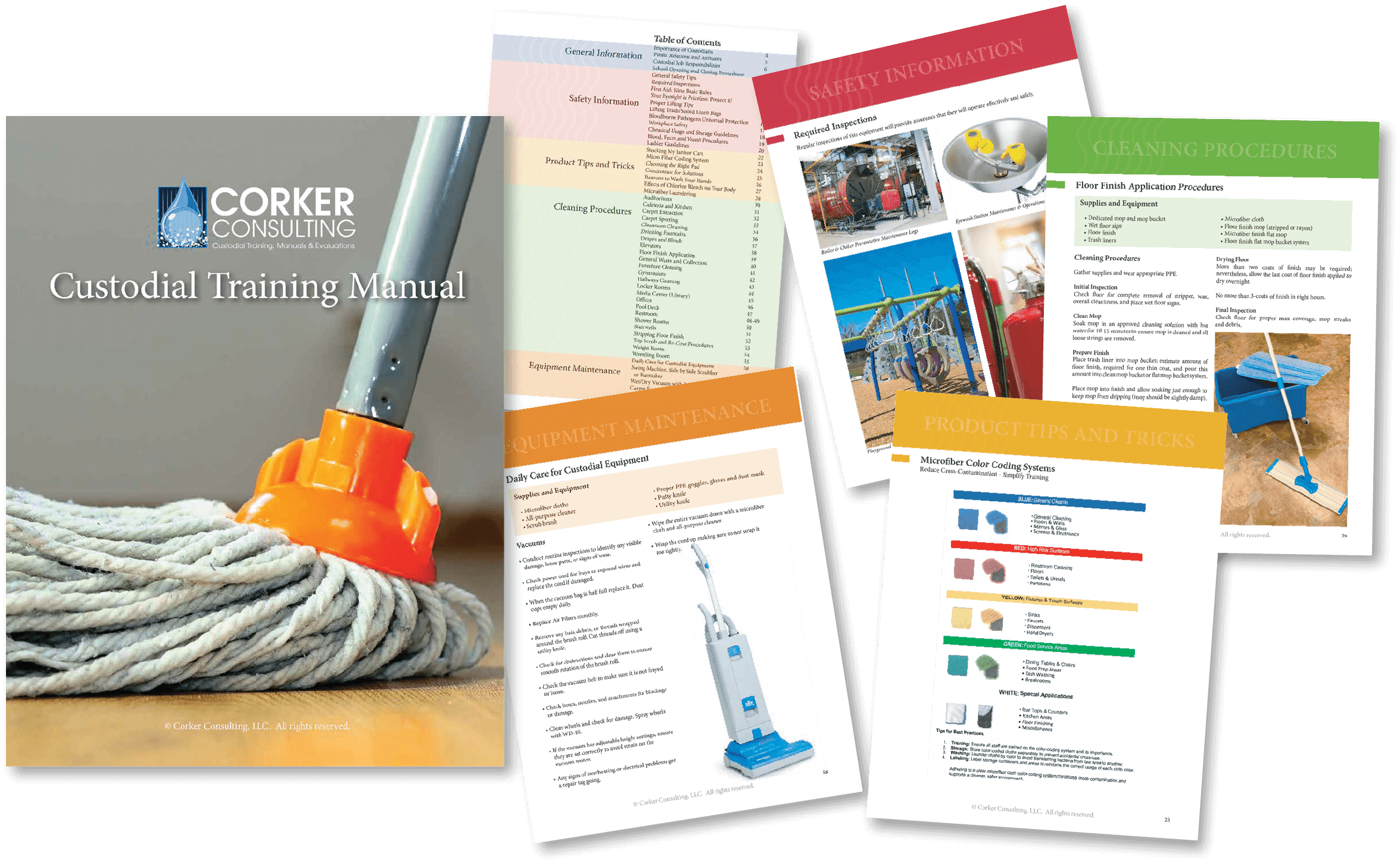
A well-developed school custodial cleaning manual should provide clear, practical guidance for daily operations.
At minimum, it should include:
1. Area-Specific Cleaning Standards
Defined procedures for classrooms, restrooms, hallways, cafeterias, gyms, and offices. Each section should outline:
- Cleaning frequency
- Approved products
- Required equipment
- Step-by-step methods
- Inspection expectations
For example, restroom procedures should clearly define disinfectant dwell time, fixture cleaning order, and documentation requirements.
2. Safety and Compliance Protocols
Clear direction on:
- Chemical handling and storage
- Personal protective equipment
- Spill response procedures
- Equipment operation guidelines
- Emergency communication processes
This protects both staff and the district.
3. Communication and Reporting Standards
Custodial teams should understand:
- How maintenance issues are reported
- How supply needs are communicated
- What documentation is required
- Professional expectations when interacting with staff and students
When communication is defined, accountability improves.
Why Generic Custodial Manuals Fail School Districts
One of the most common mistakes districts make is adopting a generic custodial manual instead of investing in customized custodial training manuals designed for their facilities.
Every school environment is different. Flooring types vary. Equipment differs. Cleaning schedules shift based on building usage.
A district-specific custodial training manual addresses exactly:
- How each facility should be cleaned
- Which products are approved
- How equipment is used in that environment
- What standards supervisors should measure against
Customization eliminates confusion and creates uniform expectations across every building in the district.
How a Custodial Manual Improves Training and Accountability
A structured custodial cleaning manual becomes the foundation for training custodial staff in schools.
New hires can learn proper procedures quickly through structured in-person custodial training instead of relying solely on informal shadowing. Supervisors can reference documented standards during coaching conversations, custodial performance evaluations, and performance reviews. Evaluations become objective instead of subjective.
Over time, written procedures create stability. A strong manual works best when it is supported by detailed custodial SOPs for each major task, so supervisors and staff can rely on a consistent, written method across every building. Even with staff turnover, operational expectations remain consistent.
The Bottom Line
A well-developed school custodial cleaning manual transforms operations from informal habits into professional systems.
- It improves safety.
- It enhances building appearance.
- It reduces complaints.
- It strengthens accountability.
In an era where health, cleanliness, and operational efficiency matter more than ever, a custodial manual is not optional. It is essential infrastructure.
Districts that invest in professional custodial consulting and customized cleaning standards position their teams for long-term success and consistent excellence across every building.
Frequently Asked Questions About School Custodial Cleaning Manuals
A school custodial cleaning manual is a documented guide that outlines cleaning procedures, safety standards, and operational expectations for custodial staff in educational facilities. It provides clear instructions for tasks such as classroom cleaning, restroom sanitation, floor care, chemical handling, and equipment use.
A well-developed manual ensures that custodial teams follow consistent practices across buildings and shifts.
Without written procedures, cleaning methods often vary between employees and locations. A custodial cleaning manual standardizes expectations, improves training efficiency, and reduces safety risks related to chemical handling and equipment use.
For school districts managing multiple buildings, documented procedures help maintain consistent cleaning quality across facilities.
A comprehensive manual typically includes:
Area-specific cleaning procedures for classrooms, restrooms, and common areas
Chemical safety and handling guidelines
Equipment operation and maintenance procedures
Personal protective equipment requirements
Communication and reporting protocols
Quality standards and inspection procedures
These elements ensure custodial staff understand both the steps involved in cleaning and the safety standards required to perform tasks correctly.
Custodial manuals should be reviewed periodically and updated whenever cleaning procedures, chemicals, equipment, or safety regulations change. Many school districts review their procedures annually to ensure they remain aligned with current facility needs and industry best practices.
Regular updates help ensure custodial teams are following the most effective and safe cleaning methods.
Written procedures provide a foundation for structured custodial training. New employees can learn standardized cleaning methods more quickly, and supervisors can use the manual as a reference during coaching and performance evaluations.
This improves consistency across staff and ensures custodial teams maintain the same cleaning standards across all facilities.